Tuesday, December 23, 2014

It's December In Our Town

It's December in our town...

A wonderful place to be...

It's December in our town...

Excitement, look and see

(From Roger Emerson's December In Our Town)
December at Porters Point is a time to explore observances and holidays that take place during the month and seek out musical opportunities to learn.  We do not celebrate holidays at our school, but we do look for cultural examples from all over the world to broaden our understanding of music.
Porters Point has a long standing tradition of holding a whole school Sing-Along in December.  This is viewed as an "assembly" as opposed to a concert.  Students and faculty gather in the multipurpose room and raise their voices in song, sometimes unaccompanied (a cappella), sometimes with pre-recordings, and sometimes adding instruments to the experience.

In the song, “African Noel”, students explore the tubano drums, always connecting to the beat. All students had a turn to play the drums during music class. At our sing-along, there were 12 tubanos and one student from each class played during this song.


Students sang songs about Christmas, Chanukah, Las Posadas, winter, and Kwanzaa.  

Friday, November 14, 2014

SECOND GRADERS AND RHYTHM

By Second Grade, students begin to really understand basic rhythm concepts.  We got a lot of mileage out of the "Create A Rhythm" activity done at the beginning of the year.  First of all, every student contributed to it.  We have used it for reading rhythms.  We have selected a line and created an ostinato out of it. Students did some writing, too.  At first we used stick notation and then we changed that into actual quarter notes and eighth notes by adding the noteheads:
Thibault-NOTEHEADS-IMG_3055
This is all part of music literacy.  But that is only a small part of what we do in Music Class.  Students always begin with a song, dance, or play party.  We then can incorporate instruments to accompany the songs.  Here is slideshow of some of our activities we have done this fall:


Wednesday, November 12, 2014

MELODIC EXPLORATION IN KINDERGARTEN MUSIC

Kindergarten students cannot wait to play instruments in Music Class.  Preparation for making music together takes time as students really need to listen to each other for that to happen.  It's amazing how motivated students become when they see the instruments out in the room!  Students have explored playing mallet instruments:  metallophones and xylophones.  They start with mallet technique using one hand, then both hands. Wrists must be relaxed!  Students discover just how hard (and soft) to play the bars.  The concept of high and low is easy on these instruments because the bars are different sizes.  To play an ascending line, they start at the "bottom" playing the bigger bars and work their way "up" to the smaller bars.  

Students also played Melody Bells.  At first students were asked to just look at the bells and tell what they noticed about them. They made predictions about what they might sound like when played.  While playing, students learned to start and stop and take turns.  We also discussed that instruments can be LOUD!!!  We all need to take care of ourselves to not hurt our ears.  I told students I sometimes wear earplugs when I go to concerts to protect my ears from extremely loud music.  And I can still hear the music!


In addition to melodic instruments, students have used rhythm sticks, triangles and shakers.  We recently made some "Pumpkin Stew" in music class -- of course, we just pretended to make stew as our music class is only 40 minutes!  


Pumpkin stew!  Pumpkin stew!  
What shall we put in the pumpkin stew?
Put it in the pot and stir it alot, 
and then we'll have some pumpkin stew!

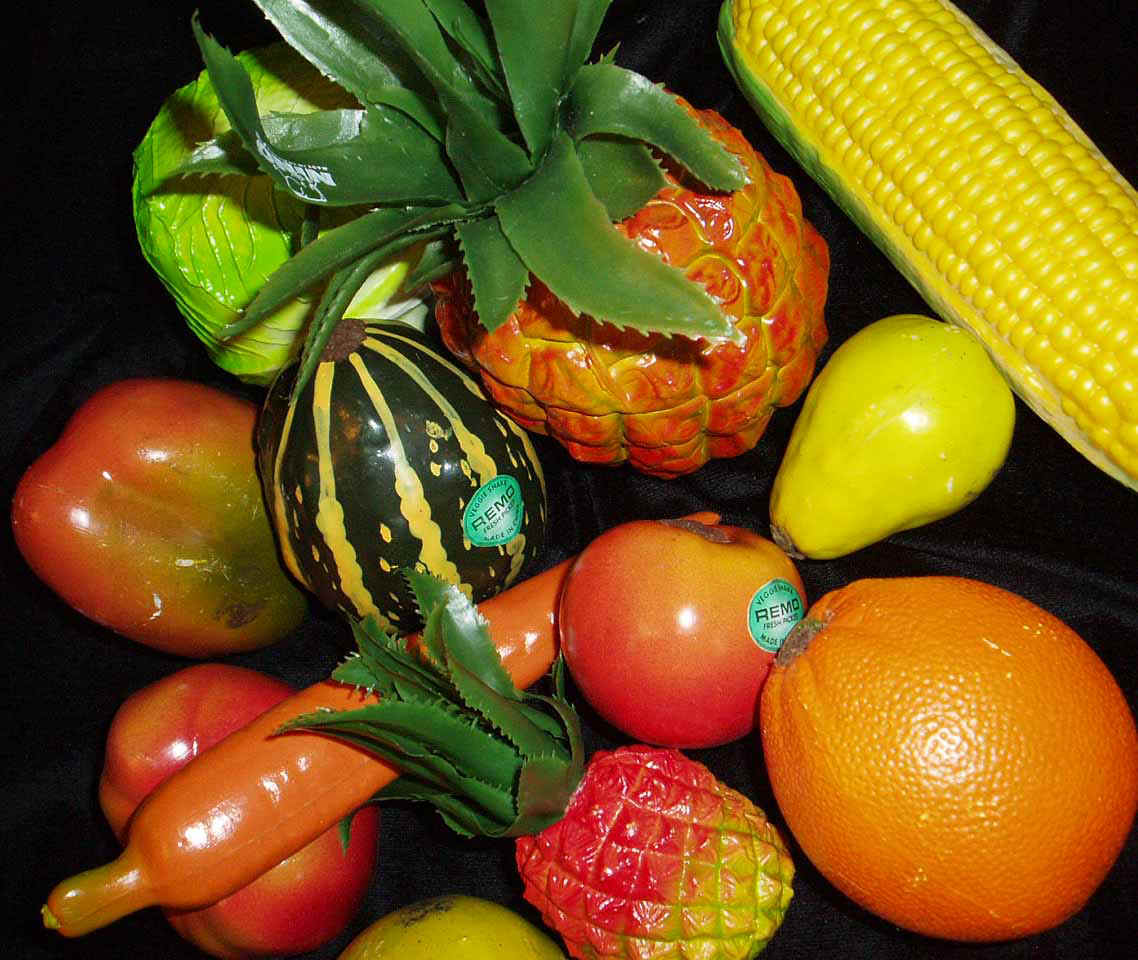
Students played a triangle on the word "pumpkin" and then we added the playing of fruit and vegetable shakers on the question mark and followed up with putting them into the big pot, complete with a stir xylophone.

Check out a short video to see what students have been up to in Music Class this fall:

Tuesday, November 11, 2014

MUSICAL INSTRUMENTS IN FIRST GRADE

There is no question that the single most important wish of students in the music room is to play instruments!  Once steady beat is established, students are ready to combine that with rhythm patterns.  Students learn that playing instruments with others does not always mean playing all the time.  In fact, different instruments can be playing different things at the same time!  We learn to speak the rhythms, clap the rhythms, and finally play them on instruments.  Students learn basic notation for reading rhythms.  The instruments we play are called rhythm percussion instruments.  The below video shows students over several weeks of using these instruments.  Enjoy!


Tuesday, September 23, 2014

Steady Beat Is So Important

The first month of school we focus on connecting to the steady beat.  Actually, we do not stop focusing on steady beat after a month -- it is a constant and continual focus!  
In kindergarten, students use body percussion to connect to the beat.  "Body percussion" means clapping hands, patting legs, snapping fingers (always a challenge), and stomping feet.  We find other ways to connect to the beat, too, like nodding our heads, blinking our eyes, and swaying from side to side.  Keeping the beat does not always mean making a sound!  
In first grade, students also connect to the beat, first with body percussion, and then with instruments such as hand drums, rhythm sticks, woodblocks, and cymbals.  They find it a challenge to keep a steady beat on an instrument while speaking or singing at the same time, but it is worth giving it a try!  I often ask them to rub their belly and pat their head to get the idea here.  "That's easy" they always say...
In second grade we began the year with a task to "Create a Rhythm".  I set up a piece of paper with 20 boxes, and every student needed to fill in one box with a one-beat notation, either a "ta" (quarter note), "ti-ti" (pair of eighth notes), or "rest" (we use the letter "z" to indicate a rest).  Students could choose any box that did not already have a notation in it.  At the end we got our composition.  Here is an example of "Create a Rhythm" from a second grade class:
Thibault-IMG_2373      
I then took this paper, copied it and cut it up into strips.  We use these 4-beat strips as a pattern to play either using body percussion or play on percussion instruments.  Oh, and we are playing the pattern while singing a song!  So the only thing that connects all this together is STEADY BEAT!!!!

Wednesday, August 27, 2014

A New School Year!!!

Greetings everyone, and welcome to a new school year!  I am very excited to be back in the classroom. I am looking forward to a musically creative year. My hope is that all students will discover they are already music-makers -- now let's see what we can do with that!!!  

Front Garden at Porters Point School

Monday, June 30, 2014

Summer Is Here!!

I have not posted for quite some time, and now it is summer vacation.  I am doing something different this summer -- I'm going to Salzburg, Austria to study music at the Carl Orff Institut!  My classes are all related to teaching music to children, and I just cannot wait to begin!  I look forward to sharing my experiences with you in the Fall...

Happy Summer!!

Carl Orff Institut Salzburg